
Dental Illness
This option is described as treatment coverage for dental disease, separate from routine cleaning. Its published explanation applies deductible and pre-existing-condition restrictions.
Dental accidents, dental disease and routine cleanings can sit in different parts of a policy. Find the benefit that matches the reason for your pet’s visit.
Pre-existing disease, age rules, required dental care and benefit limits also differ. Read the actual dental endorsement instead of assuming a rule from a general accident-and-illness summary applies unchanged.
These are questions to resolve with the policy, not automatic coverage decisions.
| Reason for care | Coverage route to check | Important qualification |
|---|---|---|
| A tooth is injured in an accident | Accident benefit and its dental definition | Ask whether the event and damaged tooth qualify, and what repair or extraction is eligible. |
| Gum disease, tooth resorption or another oral disease | Dental-illness coverage or endorsement | Disease can require an additional benefit; exclusions and prior records matter. |
| A preventive cleaning before disease is identified | Wellness schedule or a dental-care benefit that explicitly includes cleaning | A cleaning allowance may not reimburse the whole invoice. |
| A cleaning reveals disease requiring treatment | Potentially more than one benefit category | Ask the clinic to itemize services and the insurer to explain allocation. |
| Toothbrushes, chews or other home-care products | Any explicit home-care allowance | Do not assume coverage merely because the product supports dental health. |
An extraction is a procedure. The injury or disease that made it necessary is the reason for the procedure. Both matter when an insurer reviews the claim. A dental invoice should not be treated as one undifferentiated “cleaning” if it also contains diagnostic imaging, extractions, anesthesia and medication.
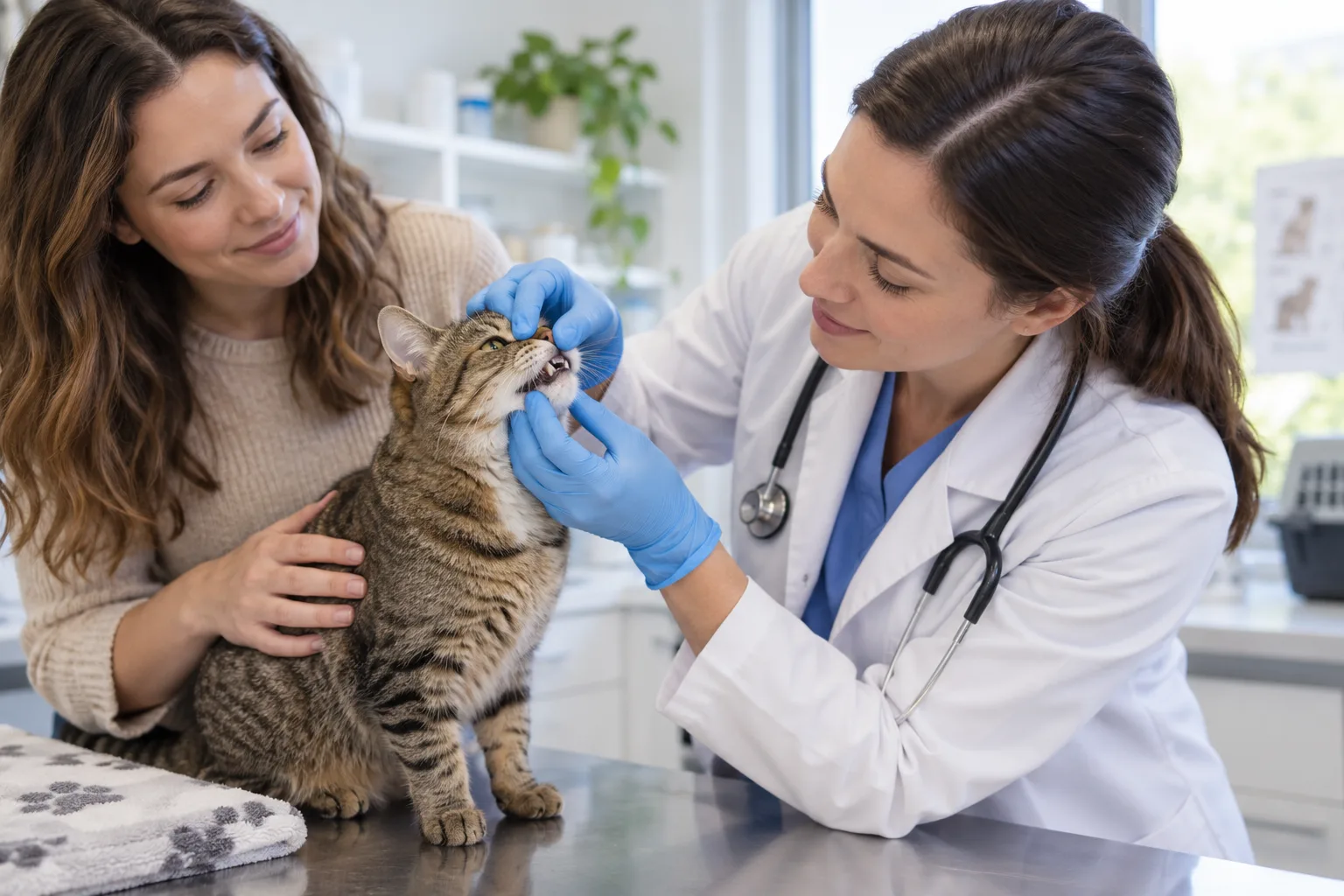
Cornell explains that a complete dental evaluation can involve anesthesia, dental charting and X-rays. For cats, tooth resorption is a disease process, not simply ordinary tartar or an accidental broken tooth. These clinical distinctions help you ask the right policy questions; they do not establish reimbursement.
Ask the veterinarian for an estimate that separates the expected services and indicates what might be discovered during the procedure. Then ask the insurer which lines may qualify under which benefit. An estimate review can reduce uncertainty, but confirm whether any answer is a binding preauthorization or only guidance.
This option is described as treatment coverage for dental disease, separate from routine cleaning. Its published explanation applies deductible and pre-existing-condition restrictions.
A different, state-dependent option is described as including illness care and routine cleaning, with different enrollment and pre-existing-condition rules. Do not transfer those terms to a Dental Illness quote.
Ask which dental option is actually available for your pet’s age and state. Obtain its benefit limit, cost sharing, waiting rules and requirements to follow veterinary recommendations. Product availability can change, and an informational page may describe an option that is not in your own quote.
A general statement that pet insurance excludes pre-existing conditions is not enough to decide a specialized dental benefit. Conversely, a particular dental add-on’s exception does not mean every pre-existing condition elsewhere in the policy becomes covered. Keep the scope of any exception exact.
If your pet already has a recommended dental procedure, ask about that procedure and the documented reason directly. Buying an add-on does not by itself establish payment for the appointment. Do not postpone treatment while waiting for a coverage decision if the veterinarian says care is needed.
A clear record helps distinguish preventive care from treatment and shows what was known before coverage began.

Keep prior oral examinations, diagnoses and treatment recommendations. Ask how any missing adoption or previous-clinic records should be handled.
Separate examination, anesthesia, imaging, cleaning, extractions and medication. Ask what may change after the oral examination.
Mark the dental benefit, exclusions, sublimit and required preventive care. Confirm whether the limit is separate from or inside the main annual limit.
Keep the itemized invoice and clinical notes. If a line is declined, compare the explanation with the diagnosis and the specific provision cited.
For routine care, compare the extra premium with the amount you can realistically claim for planned, eligible services. If a cleaning benefit pays only up to a scheduled amount, a larger clinic bill does not increase that allowance. Also check whether anesthesia or pre-procedure testing consumes the same limit.
For illness cover, look beyond the next cleaning. Ask what happens if your dog or cat develops a new dental disease later, whether multiple teeth share one limit, and whether the benefit can remain in force as the pet ages. A low cleaning allowance and meaningful disease protection are different value propositions.
Read the main policy, the dental endorsement and the wellness schedule together. If two documents seem inconsistent, ask the insurer which wording applies and retain the written response. A sales summary should not be your only evidence.
How veterinary dental evaluation and treatment are carried out.
Read the source → Cornell: feline dental diseaseClinical context for dental disease and tooth resorption in cats.
Read the source → California insurance regulator: questions to askQuestions about exclusions, limits and the basis of reimbursement.
Read the source →Regulator guidance supports the buying framework. Any named product example was checked against current official insurer materials; your state-specific policy and selected benefits determine the actual offer. No personalized premium was collected for this guide.
Check current options for your pet and location, then compare the policy details, exclusions, costs, and eligibility before choosing.